
An Incredibly Easy Method That Works For All
10 Apr 2021
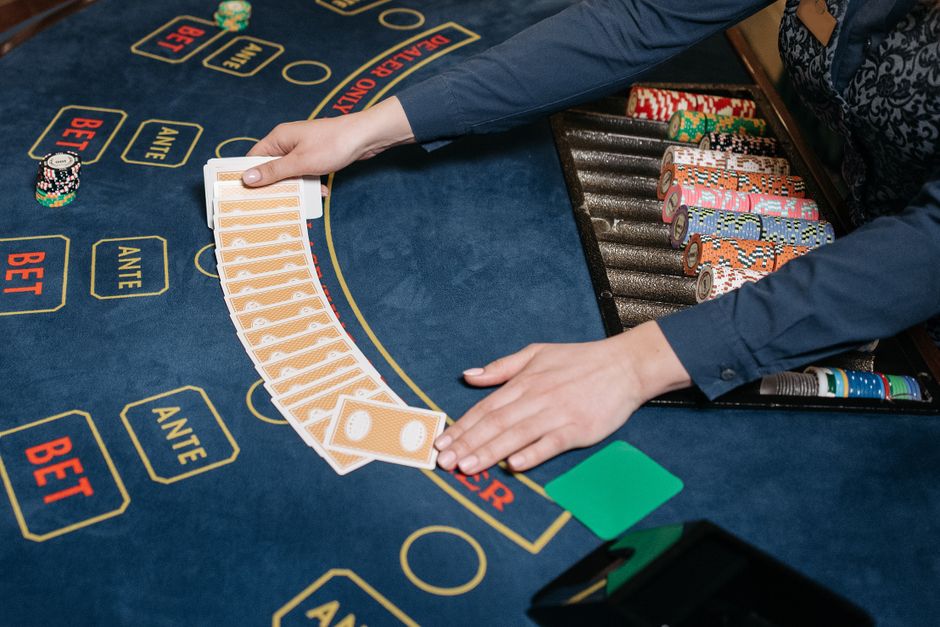
You sit down at a slot machine, a poker table, or open a sports betting app. The lights flash, the odds tick, and somewhere in the back of your mind you wonder: is this actually winnable, or am I just paying for entertainment? That question separates a casual player from someone who lasts. The answer isn't about luck or hot streaks—it's about understanding the math that runs underneath every game. Get that right, and you stop bleeding money on bad decisions. Get it wrong, and the house will quietly drain you, one bet at a time.
Slots are the most popular casino game on earth, and also the most misunderstood. Unlike blackjack or poker, there's no decision that changes the odds. Every spin is independent. The only number that matters is the RTP—Return to Player—expressed as a percentage. A slot with 96% RTP returns, on average, $96 for every $100 wagered over millions of spins. The remaining 4% is the house edge. We found สล็อตเว็บตรง to be a handy reference here.
That sounds small. It isn't. If you spin $5 a pull and do 500 pulls an hour, you're wagering $2,500 hourly. At 4% house edge, your expected loss is $100 per hour. High-volatility slots (think Book of Dead or Bonanza) can hit 94% RTP or lower, pushing that hourly loss to $150. And those big jackpot slots? Many sit at 88–92% RTP. The dream is expensive.
Here's what actually helps:
Poker is different. You're not playing against the house—you're playing against other people, and the house takes a rake. That single fact changes everything. In Texas Hold'em, a skilled player can achieve a positive expected value (EV) over thousands of hands. The house edge isn't fixed; it's the sum of your opponents' mistakes minus the rake.
Consider a $1/$2 no-limit game with a 10% rake capped at $5. That rake is brutal at low stakes. You might win $12 in a pot, but $1.20 goes to the house. Over 30 hands an hour, the rake can eat $15–$30 of your winnings. This is why many pros avoid low-stakes live games and prefer online rake structures or higher stakes where the cap matters less.
Three concrete poker truths that separate winners from losers:
The rake also explains why online poker is tougher than live. At $0.50/$1 online, the rake is often 5% capped at $3, but you play 4–6 times more hands per hour. The good players adjust by playing tighter and more aggressively. If you're not studying ranges and bet sizing, you're the fish.
Sports betting feels skill-based because you watch the games. But the bookmaker doesn't care who wins—they care about balancing the action and collecting the vig (vigorish). A standard point spread bet is -110 on both sides. You risk $110 to win $100. That means you need to win 52.38% of your bets just to break even. Most recreational bettors hit 48–50%. That 2–4% gap is the book's profit.
To beat the vig, you need a genuine edge. That means:
Data point: In the 2023 NFL season, the average hold percentage for sportsbooks in Nevada was around 5.5% on football. That's the house edge in action. Sharp bettors don't try to win every bet—they try to find mispriced lines and bet them consistently.
Every game above has a different edge, but one principle applies to all: protect your bankroll. A simple framework:
The math doesn't care about your feelings. If you bet $500 on a -110 line and lose, you need to win $550 just to get back to even. That's a 52.4% win rate required—harder than it sounds.
If you want the best shot at long-term profit, poker is the only choice. The house edge is beatable because you're playing against other humans. If you want entertainment with a predictable cost, slots are fine—just treat them like a night at the movies. If you love sports and have strong analytical skills, sports betting can be profitable, but only if you track lines, shop for the best odds, and accept that 55% winning is elite.
The worst mistake is mixing them up. Don't play slots like poker. Don't bet sports like slots. Each has its own math. Learn the numbers, set limits, and never bet money you can't afford to lose. The house always has an edge in the long run—unless you're the one setting the terms.
So next time you log in or sit down, ask yourself: do I know the RTP, the rake, or the vig? If the answer is no, you're not gambling. You're donating.

The Hiddenledge An honest, everyday look at the things that make life a little better — with advice you can actually use.

April 25, 2019 at 10:46 am
Take in the iconic skyline and visit the neighbourhood hangouts that you've only ever seen on TV. Take in the iconic skyline and visit the neighbourhood.


Want to be notified when we launch a new template or an udpate. Just sign up and we'll send you a notification by email.


Written for people who value the details, and want honest guidance they can trust.

Soldman Kell
April 25, 2019 at 10:46 am
Take in the iconic skyline and visit the neighbourhood hangouts that you've only ever seen on TV. Take in the iconic skyline and visit the neighbourhood.